
Faster Clinical Decisions with Clinic AI
Partnerships & Certifications










Trusted By
Enterprises & Startups











Clinical Decision Workflow Challenges
Patient Record Review Time
Clinicians often need to go through previous visits and other parts of the patient record before they can understand the current case.
Relevant Clinical Context Gaps
Important information can be easy to miss when it sits across different parts of the patient record. This can make it harder to connect previous history with the current visit.
Clinical Decision Preparation Time
Before deciding what to do next, clinicians need to understand the patient’s history and current condition. Reviewing that information manually can slow the decision process.
Patient Intake Quality Gaps
The quality of intake can change depending on who conducts it and how much time they have. Missing follow-up questions can leave the clinician with incomplete information.
AI Output Trust Concerns
Clinicians need to know what patient information supports an AI-generated response. Without that context, the output is harder to review and use.
Clinic AI Core Capabilities
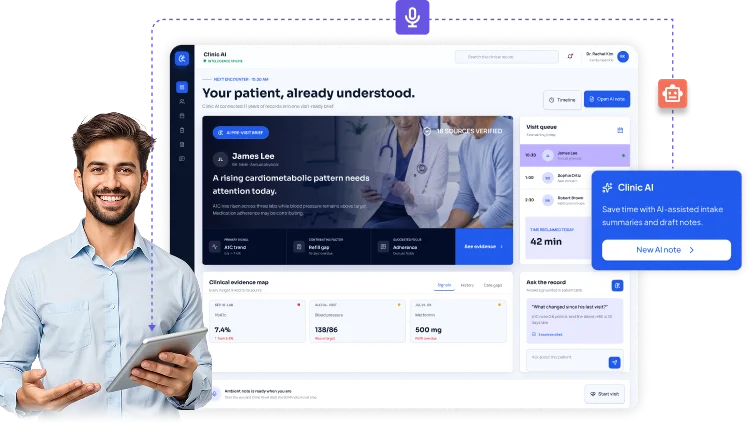
Clinic AI brings patient data and clinical decision support into the same workflow. It helps the clinician understand the case before the final decision is made.

Patient Clinical Context Review
Clinic AI reviews current and previous patient records to bring relevant clinical information forward. This gives the clinician a clearer view of the case without going through every part of the chart manually.
Differential Diagnosis Preparation Support
Clinic AI can use the available patient information to prepare possible differential diagnoses for clinician review. The clinician decides which possibilities are relevant and what further assessment may be required.
AI Clinical Decision Support
Clinic AI reviews the patient’s current and previous clinical data to support clinical decisions. It highlights relevant findings and suggests possible next steps for the clinician to review before deciding on the final course of action.
Clinical Action Plan Support
Clinic AI can help prepare a possible action plan based on the patient’s clinical information. The clinician reviews the suggested direction and decides what should happen next.
Clinical Red Flag Identification
Clinic AI can identify information collected during intake that may need closer clinical attention. This helps bring important responses forward before the clinician moves ahead with the visit.
Evidence-Based Source Review
Clinic AI connects generated clinical information with the patient records used to support it. The clinician can review the source before accepting the AI-generated output.
AI Clinical Document Generation
Clinic AI can also prepare Case Summaries, H&Ps, Differential Diagnoses, and Assessment & Plans from the available patient information. Each document stays editable until the clinician reviews and approves it.
Structured Patient Intake Support
Clinic AI guides the intake process using a structured clinical approach such as OLD CARTS. It can ask follow-up questions when a response needs more detail and carry that information into the same patient encounter.
AI SOAP Note Generation
Clinic AI uses patient intake and clinical records to prepare a draft SOAP note. The clinician reviews the Subjective, Objective, Assessment, and Plan sections before approving the final version.
EMR Clinical Data Integration
Clinic AI can connect with the EMR to pull patient information into the clinical workflow. Supported data can also be sent back to the connected system after clinician review.
Clinic AI Outcome Benefits
01
Faster Patient Record Review
80%
Time Saved
02
Better Clinical Context Access
360°
Patient View
03
Supported Clinical Decision Making
3×
Decision Confidence
04
Faster SOAP Note Preparation
70%
Less Documentation
05
More Consistent Patient Intake
99%
Intake Completeness
06
Traceable AI Clinical Output
100%
Audit Traceability
How Clinic AI Works
Clinic AI supports the patient visit from intake to final documentation. The clinician stays involved throughout the process and makes the final clinical decision.

Structured Patient Intake Process
Phase 2
Patient Clinical Data Retrieval
Phase 3
AI Clinical Context Review
Phase 4
Clinical Decision Support Review
Phase 5
Clinical Documentation Final Review
Industries Clinic AI is Best For
Ambulatory Outpatient Care Clinics
Urgent Walk-In Care Centers
Telehealth Virtual Care Providers
Multi-Specialty Group Medical Practices
Nurse Triage Coordination Teams
Frequently Asked Questions
Does Clinic AI make the final clinical decision?
No. Clinic AI provides preliminary clinical decision support based on the patient information available to the system. The clinician reviews the output and makes the final decision.
Can Clinic AI support different specialties?
Yes. Intake questions, clinical workflows, and documentation formats can be adjusted for different specialties and care settings.
Can clinicians verify AI-generated guidance?
Yes. Clinic AI can connect generated information with the patient records used to support the response.
Can Clinic AI use our existing workflow?
Yes. Clinic AI can be configured around existing intake and clinical review processes rather than requiring teams to start with a completely new workflow.
Can Clinic AI support multiple locations?
Yes. Clinic AI can support healthcare organizations that operate across more than one clinic or facility.
Can different users have different access?
Yes. Access can be set according to the responsibilities of physicians, nurses, patients, and other authorized users.
Can Clinic AI follow our SOAP note format?
Yes. SOAP note generation can be configured around the structure already used by your clinical team.
Resources & Blogs
Get in Touch